
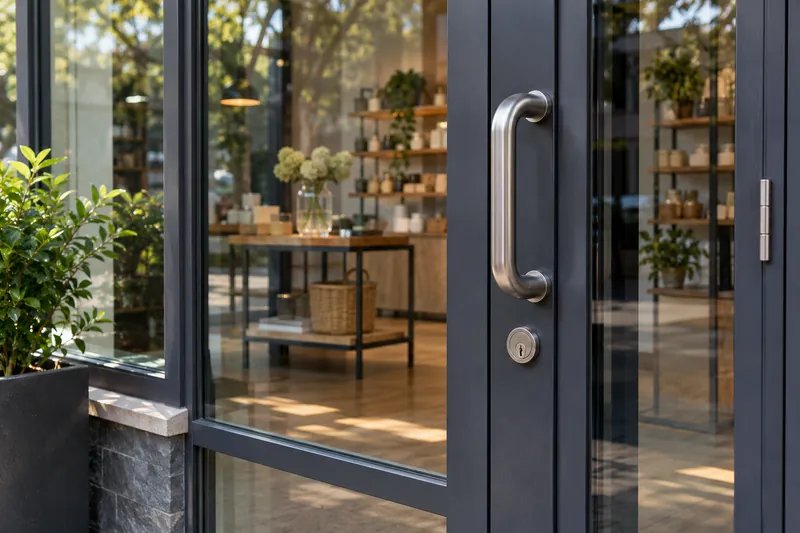

Begin with the affected opening
A business address may contain a public entrance, a staff door and rooms managed by different people. Name the actual opening. A lock inside a leased unit and a shared building entrance are not necessarily the same request.
On a multi-business property such as Gibson Mill, the tenant name and the particular building help distinguish the location. That is a useful local reference, not an indication that every tenant uses the same locks or has the same arrangements.
A missing key does not describe the whole job
If a staff key has been lost, the useful question is which locks that key can operate. Replacing an entire door is not a conclusion that follows from the missing key alone. The lock type, its condition and the intended access change need checking.
Suitable rekeying can change an accepted key while retaining usable hardware. Worn or damaged fittings may call for repair or replacement instead. These options should be explained for the actual opening.
A keypad, electronic access system or specialist commercial fitting needs its own capability check. Do not assume a general lock visit includes programming every device, changing a building system or work on a fire-rated assembly.
Think through the handover
Decide who should receive the keys and which authorized users still need access. For a managed building, confirm the responsible contact before arranging changes. This is especially useful when the person reporting the problem is not the person who can approve the work.
The written scope should identify the openings, supplied hardware and included keys. If only one entrance is being changed, keep that limit clear rather than treating the work as a whole-building security upgrade.
For a door that is not closing or latching as intended, explain that condition separately from the key issue. A change of key should not obscure a door problem that still needs assessment.