
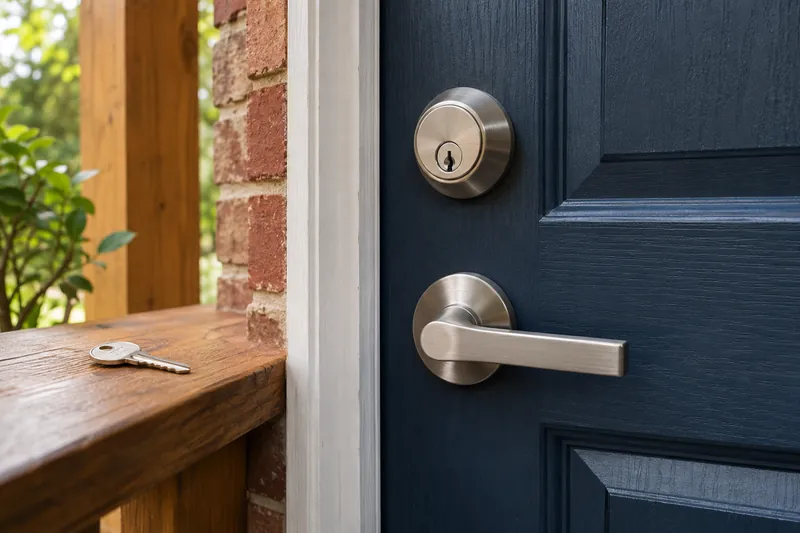

Notice when the resistance happens
Does the difficulty occur with the door open, only when it is closed, or with one particular key? Those differences can help describe the request without forcing the lock again.
A bolt that rubs when the door closes may involve alignment. A damaged key or worn fitting can create a different problem. A useful assessment considers the whole opening rather than treating every difficult turn as the same failed part.
Avoid forcing a key that is bending or catching. It is easier to explain an intact key and the original symptom than a lock with a newly broken piece inside. Broken-key work and any related repair still need checking for the actual fitting.
Repair, rekey or replace?
These words describe different outcomes. Repair addresses a fault. Rekeying changes the accepted key in suitable hardware. Replacement supplies another lock or component. A proposal may involve more than one, but it should explain why.
If the only concern is an old key still working, rekeying may be the relevant option. If the lock or door is not operating normally, a key change on its own may leave the original issue unresolved.
Keeping an existing handle can be possible in some jobs, but it depends on the fitting and the proposed work. Ask which parts stay and which are being supplied, especially when the appearance of an entrance matters to you.
Check it as a door, too
An open-door key test is useful, but normal use also includes closing the door, engaging the latch and locking it without having to lift or pull it into position. The agreed result should address the original difficulty.
For a commercial or shared entrance, identify the person responsible for the hardware. Specialist or regulated door assemblies may need a specific capability check; a general lock repair request does not establish that scope.
A photograph can help show the type of lock. It cannot confirm an internal fault or prove a replacement is required. Use it to clarify the request, with the final condition assessed on the actual opening.