
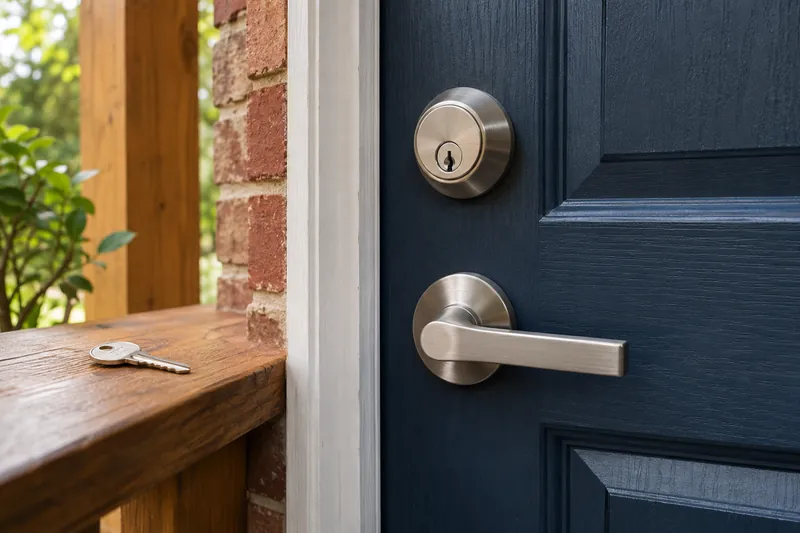

Changing access while retaining hardware
Rekeying changes which key operates a suitable lock. It is different from duplicating a key, which makes another copy without removing the usefulness of existing copies.
For an otherwise usable lock, that can answer a lost-spare or unknown-copy concern. It does not turn a worn mechanism into a new one or correct a door that will not align with its frame.
If the lock already sticks, explain that first. The lock repair information helps separate an access change from an operating problem.
One key for several locks is a compatibility question
It can be convenient to reduce the keys you carry, but different locks are not automatically compatible. Their types and keyways need checking before one-key operation is promised.
Include the actual locks you want considered. A deadbolt and a separate handle may both accept keys, while another entrance could use different hardware. The work should identify which locks are included and which will remain as they are.
This is not a reason to change every fitting in the property. Keep the desired result clear and ask what can be retained. If a replacement is proposed, understand the reason for it and the keys that will be supplied.
After the change
Keep track of the new keys and who receives them. Check that the agreed locks operate with the new key and that the doors still close and latch normally. A key change should leave the door usable in everyday operation.
For a rental or shared building entrance, confirm the arrangement with the responsible owner or manager. Staff access in a business also needs a clear handover so authorized users receive the correct keys.
For a household request, see residential locksmith help. For a staff-key issue, the business lock page covers the scope of affected openings.