
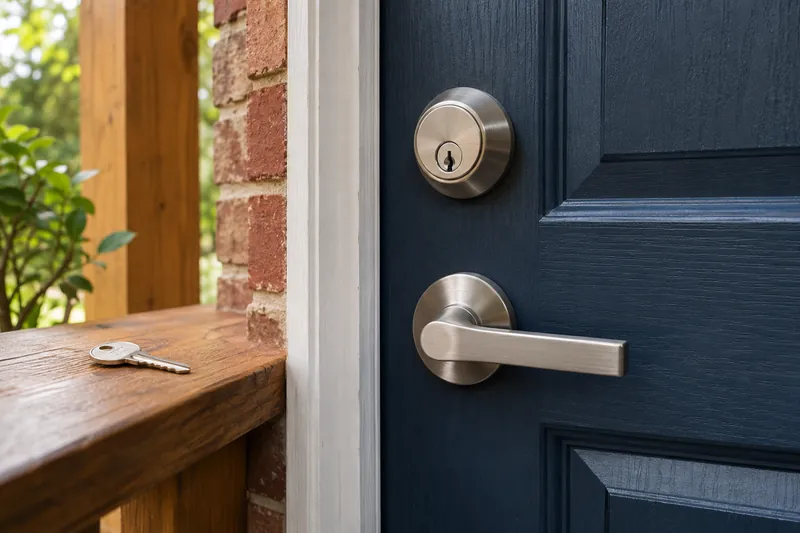

A familiar door, a different problem
Start with the entrance that needs attention. A deadbolt at the front, the door from the garage and a separate side entrance can have different hardware. Changing one does not automatically change the others.
If a key turns easily until the door closes, the position of the door and latch may matter. If the same key struggles with the door open, the lock or key may need a closer look. These observations help explain the problem; they do not settle the diagnosis.
Our lock repair page looks at how the key, lock and door work together. You don't have to choose a replacement before the existing fitting has been assessed.
When the keys are the concern
Perhaps a spare has gone missing, or you do not know who has copies. If the lock is suitable and in good condition, rekeying may let you keep it while changing which key operates it.
That is different from making an extra copy of the current key. A copy adds another working key; it does not remove access from someone holding an older one.
The rekeying explanation covers the questions to resolve before choosing that work, including whether the locks can share a key.
Keep the useful parts in view
A new lock is one possible answer, but a proposal should explain why it is needed. Ask whether the existing handle stays, which lock is being supplied and how many keys come with the work. A photo can help identify a fitting before the visit, without proving what needs replacing.
For a rental or shared entrance, involve the owner or the person responsible for the property. A private key change should not leave another authorized user without access.
A working result includes opening, closing and locking the door normally. If the original difficulty remains when the door is closed, a new key alone has not answered the whole question.