
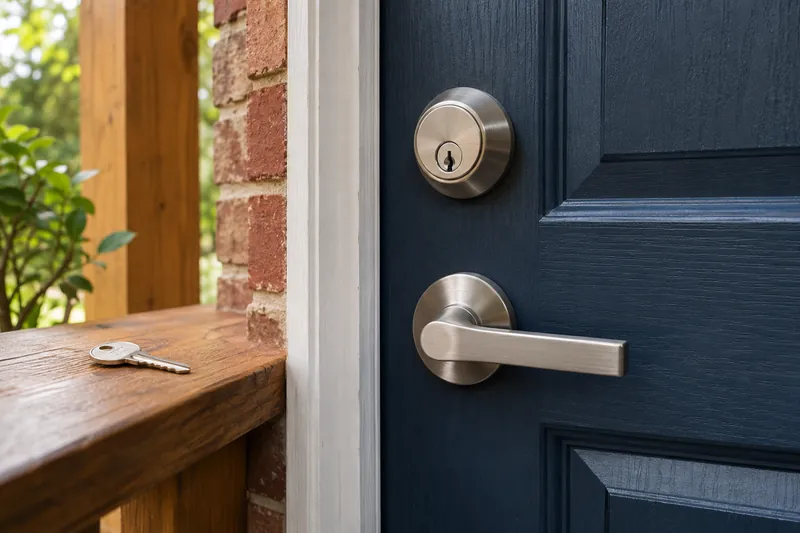

Access first, with a clear limit
Being locked out and needing a new key are related problems, but they are not identical. A vehicle may only need entry. A missing car key may also need replacement and programming. A door with damaged hardware may need repair after access is restored.
You do not need a technical description. Say whether the key is inside, missing or broken, and whether there is visible damage. That gives a more useful starting point than choosing a method or a part yourself.
For a missing vehicle key, the car key replacement page explains how the actual vehicle affects the options.
Use the place where the vehicle or door is
A destination can cover a large area. In downtown Concord, the municipal deck and county deck have different entrances. At a race event, a general Speedway address may not identify the lot where a car is parked.
The current parking position matters more than the attraction you visited. A deck name, level or marked entrance can help establish the right location without promising access through a gate or a closed property.
The Concord parking guide separates those local places. Follow current operator instructions and signs when access is restricted.
Check the arrangement before work begins
Ask who will carry out the work, what can be quoted from the information available and what still needs inspection. Arrival time depends on the current request and availability; ask for a current arrival estimate for your address.
The person attending will need to establish authorization to access the property or vehicle. For rented, shared or employer-managed property, the owner or responsible manager may need to be involved.
If a person is in immediate danger, use the appropriate emergency service. A locksmith request is not a substitute for that response. For the lock or key work itself, keep the proposed access, parts and follow-on repair clear.